Conservation cleaning, metal work and masonry repairs at the cemetery of St John the Divine
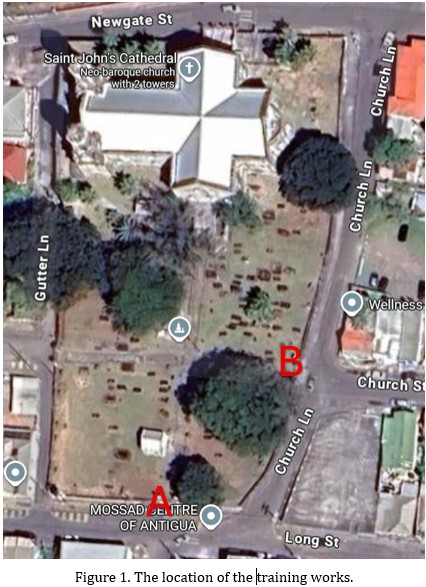
M Womersleys have just finished assisting students and tutors with conservation cleaning, metal work and masonry repairs at the cemetery of St John the Divine. The achievements of the tutors and students are summarised below. The training site location is shown in Figure 1, an aerial view of the Cathedral Church of St John the Divine.
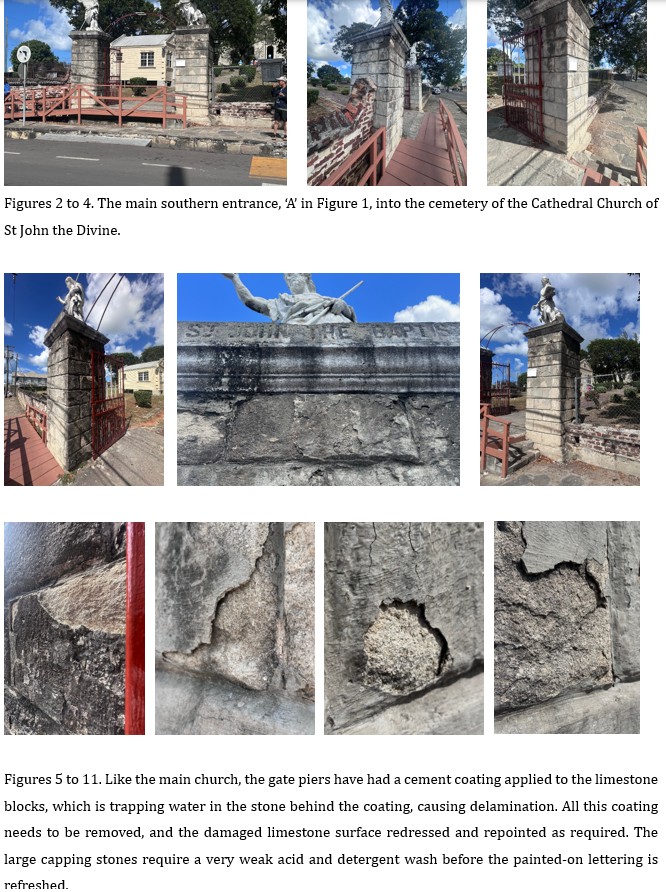
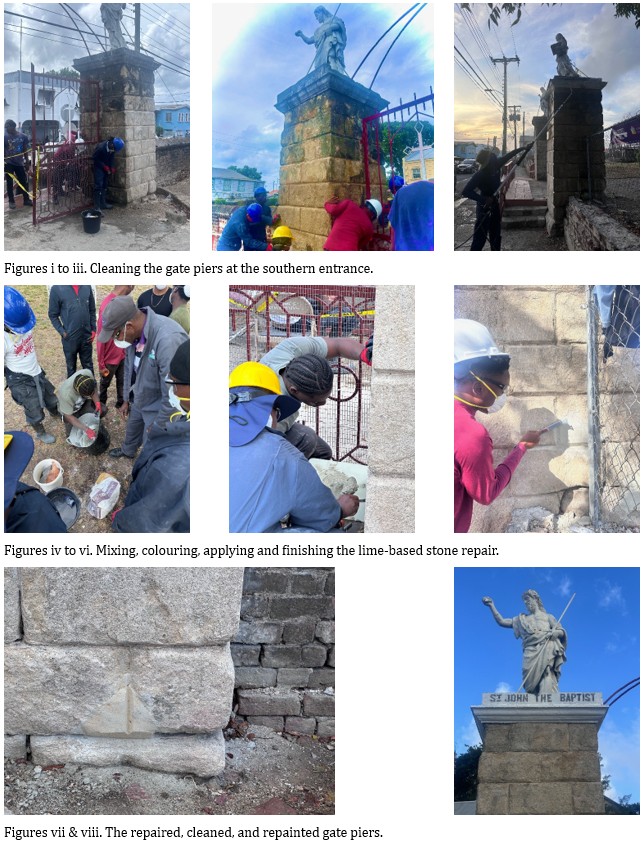
The first area we worked on is the main southern entrance, ‘A’ in Figure 1, see Figures 2 to 4. Like the main church, the gate piers had a cement coating applied to the limestone blocks, which was trapping water in the stone behind the coating, causing delamination. Figures 5 to 11. This coating was removed, and the damaged limestone surface redressed, repointed and repaired using ‘StOne’ lime-based stone repair material, which was frescoed with yellow, black and ochre iron oxide pigments in water. In addition, the entire stone piers were lightly acid- and detergent-cleaned before the residues and remaining soiling were pressure-washed off. The large capping stones had loose acrylic paint removed, and the lead lettering was cleaned with water and wire brushes before repainting. See Figures i to v.
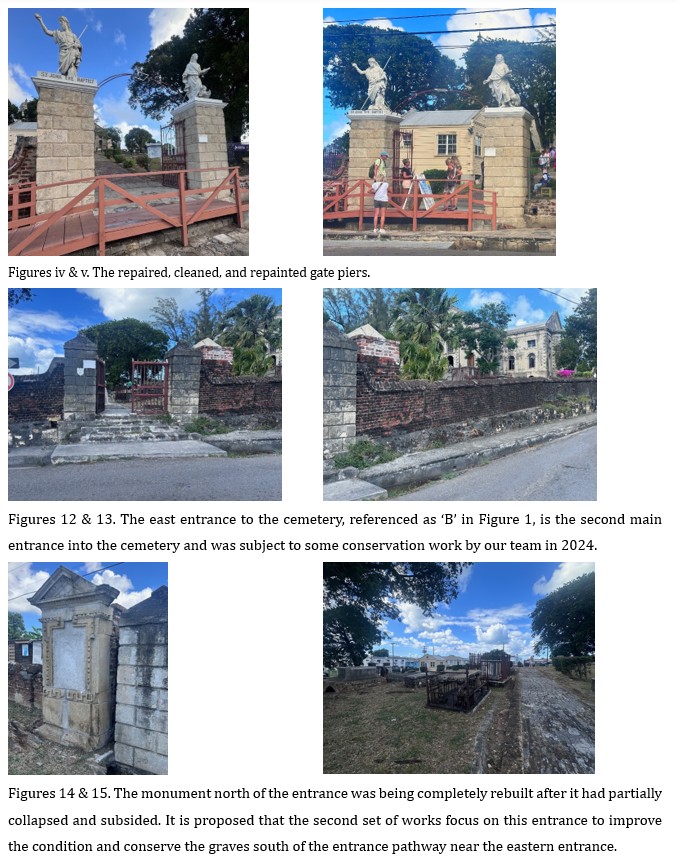
The east entrance to the cemetery, referenced as ‘B’ in Figure 1, is the second main entrance and underwent some conservation work by our team in 2024. See Figures 12 & 13. The monument north of the entrance was completely rebuilt after it partially collapsed and subsided. The second set of works focused on this entrance, improving its condition and conserving the graves south of the entrance pathway near the eastern entrance. See Figures 14 & 15.
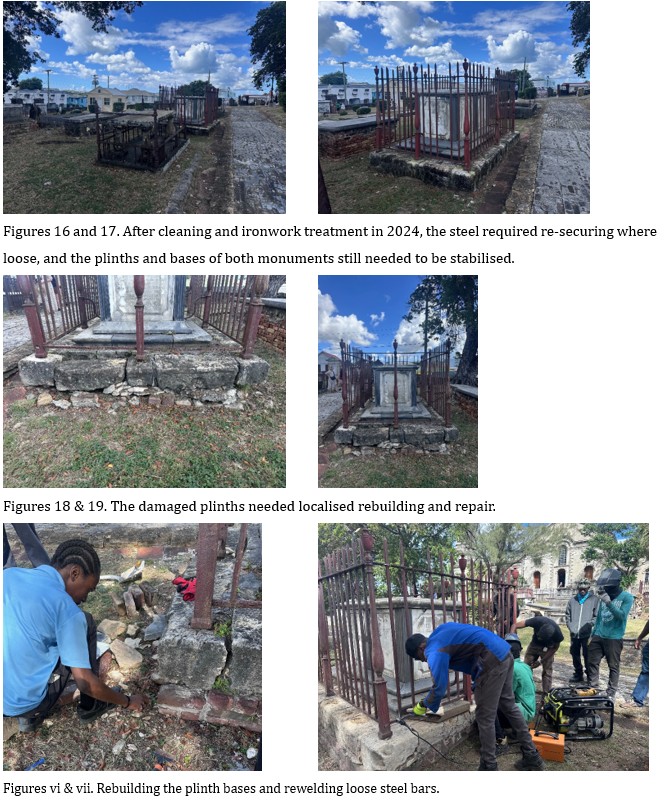
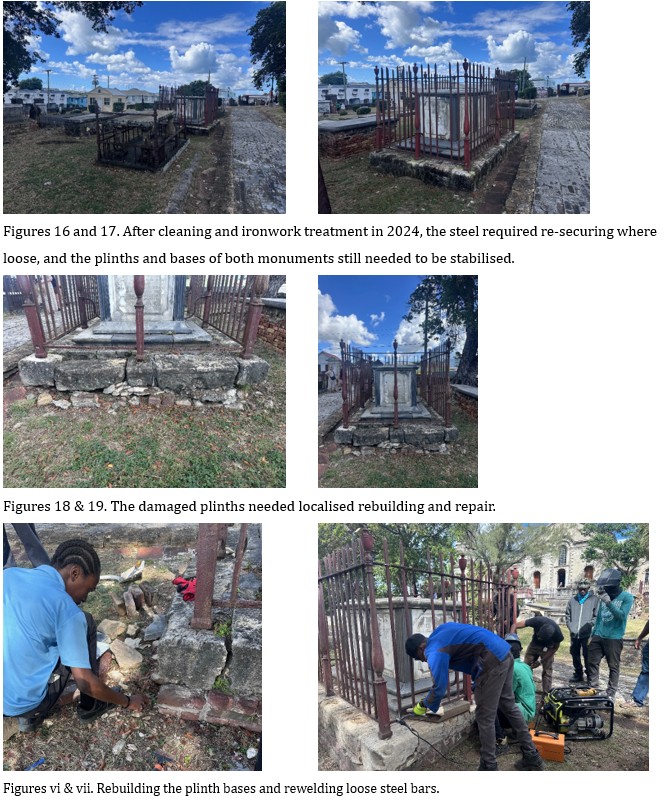
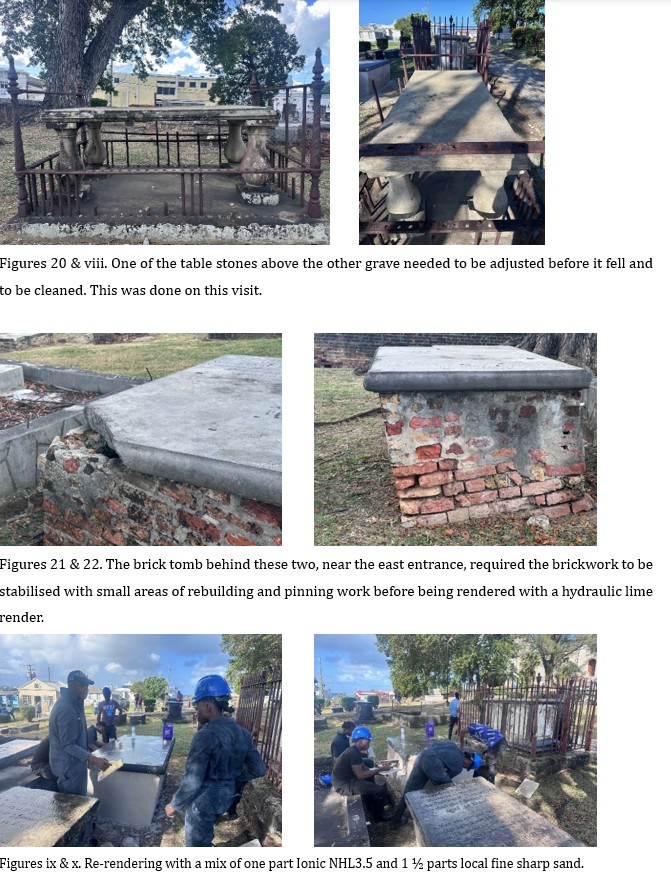
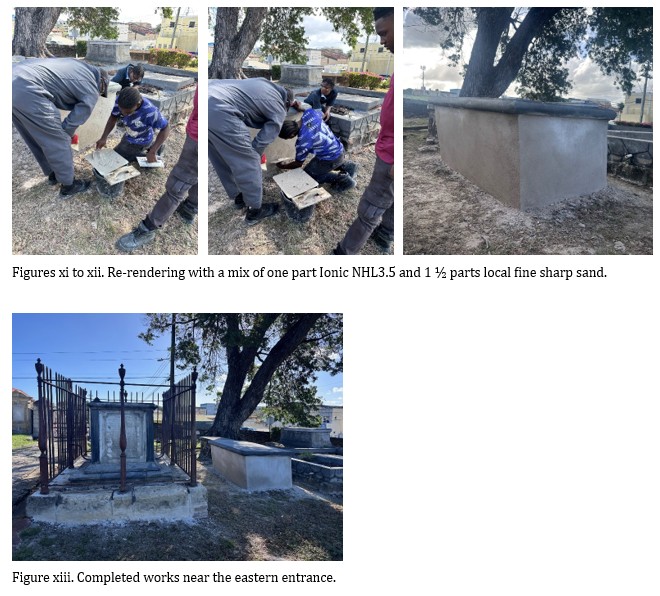
After cleaning and ironwork treatment in 2024, loose steel bars required rewelding to the base plates, and the plinths and bases of both monuments needed rebuilding. As shown in the foreground of Figures 16 and 17. The table stone above the other grave needed to be adjusted. Figure 20. The brick tomb behind these two, near the east entrance, required the brickwork to be stabilised with small areas of rebuilding and pinning work before being rendered with a hydraulic lime render. Figures 21 & 22. The ongoing and completed work is shown in Figures vi to xiii.
This work is part of a project funded by the Queen Elizabeth II Platinum Jubilee Commonwealth Heritage Skills Training Programme, funded by the Vinehill Trust.
Related Articles

Report on the most appropriate way to repair a stone plinth Gillygate York
M. Womersleys were asked by the owner of a property on Gillygate as to the best way to repair the plinth…

A scheme for the repair of the listed Barn and Granary perpendicular to Lily Hall, June 2026
Introduction M Womersleys were asked to prepare a scheme for the repair of the listed barn …

Bramhall Hall Initial findings after the plaster collection from the upper Solar Chamber
M Womersleys were asked to look at the makeup of the plaster in the Ball Room in the South Wing (Figures…